Drain cleaning is the removal of a blockage from a household drain line using a cable machine, a hand auger or, for tougher jobs, water pressure. It restores flow to a sink, tub, shower, floor drain or the main line that carries everything out of the house. Claremont Express Plumbing dispatches licensed plumbers to clogs at any hour, including nights and weekends, because a blocked drain rarely picks a convenient time.
Drain emergency: when a clog cannot wait.
If a tub fills when the washing machine drains, or a toilet bubbles after you run the kitchen sink, the blockage is probably past the branch lines and into the main. Stop using water in the house. Every flush or load of laundry adds to what is already trying to come up through the lowest opening. That is usually a floor drain, a tub or a ground-floor toilet.
Signs your drain needs cleaning today.
- Water pools in the sink or tub and drains in a slow spiral, or not at all.
- A gurgling sound from a drain when another fixture runs.
- More than one fixture clogged at the same time.
- Toilet water rises toward the rim when you flush a different fixture.
- Water appears in the shower when the washing machine empties.
What actually clogs Claremont drains.
Most blockages are ordinary: hair and soap scum in tub traps, grease and food scraps in kitchen lines, paper products that were never meant to be flushed. The City of Claremont asks residents to flush only toilet paper, no wipes, paper towels or feminine products, and notes that blockages cost more in older pipes.
Mineral buildup is its own factor. Golden State Water Company's 2026 water quality report lists average hardness of 190 mg/L, about 11 grains per gallon. Hard water leaves scale on pipe walls, and rough scale gives grease and lint something to grab. Houses with older cast iron or galvanized branch lines tend to show it first.
Snaking and cabling: how the cable machine works.
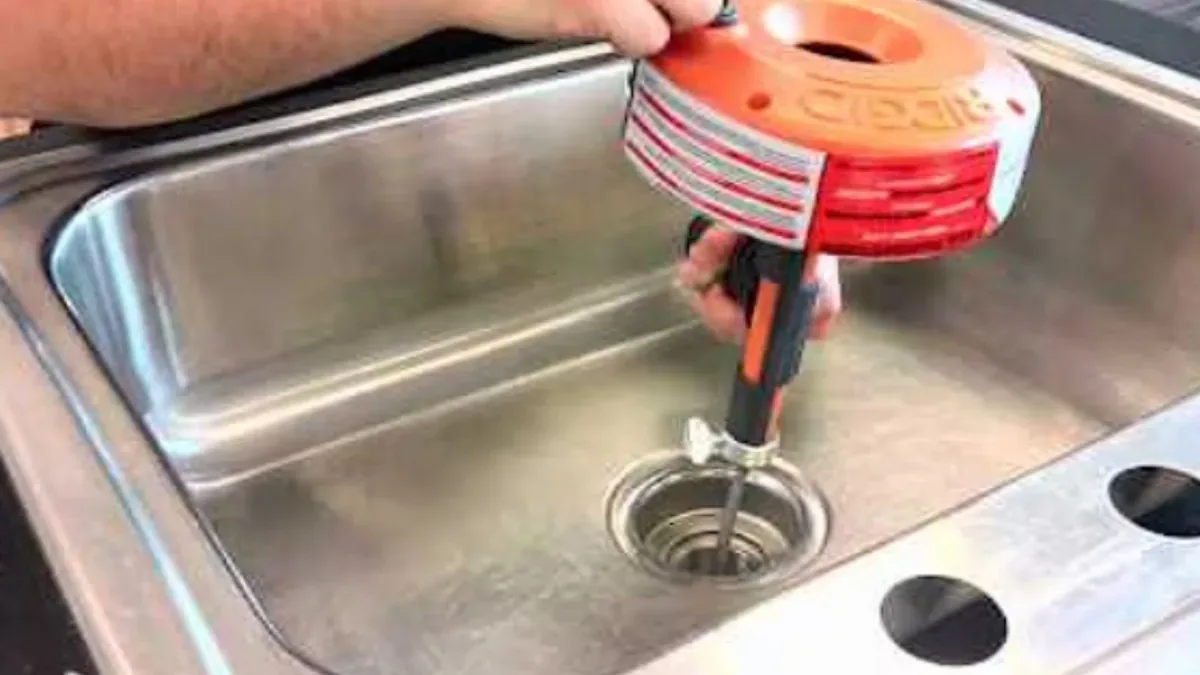
A plumber's drain cable is a coiled steel line on a motorized drum. It feeds into the drain through a cleanout or the fixture trap, spins against the blockage and either breaks it apart or hooks it so it can be pulled back out.
Cable size matters. A small cable fits a bathroom sink, a heavier one reaches 50 feet or more into a main line, and cutter heads handle roots.
Cabling clears the opening but does not scrub the pipe wall. If grease or scale lines the pipe, the clog tends to come back, which is where hydro jetting earns its place.
| Method. | Best for. | Trade-off. |
|---|---|---|
| Hand auger. | Sink or tub trap clogs close to the fixture. | Short reach, cannot handle roots or heavy grease. |
| Drum cable machine. | Branch lines and most main line stoppages. | Opens a channel but leaves wall residue. |
| Cable with cutter head. | Roots in a lateral or main. | Roots regrow if the pipe has open joints. |
| Camera-guided cleaning. | Repeat clogs with no clear cause. | Adds a step but shows the actual pipe condition. |
Kitchen sink clogs.
Kitchen sinks account for a large share of drain calls, and the cause is nearly always grease. Cooking fat goes down hot and liquid, then cools and coats the pipe like candle wax. Coffee grounds, rice and pasta stick to that coating, and within months a half-inch opening is all that is left.
A kitchen line usually joins a larger branch just past the P-trap, so a plumber starts by pulling the trap and checking the first few feet by hand. If a disposal sits in the line, we check that it is not the true culprit before running a cable through it. Chemical drain openers can damage old fittings and burn skin if the line has to be opened afterward.
Sink or tub backing up? Call dispatch.
A licensed plumber can be sent out day or night. Stop running water until they arrive.
What the plumber does on a visit.
Visit sequence.
- 1.
Quick triage by phone.
Dispatch asks which fixtures are affected, which are not, and whether water is rising anywhere.
- 2.
Locate the access point.
The plumber finds the nearest cleanout, trap or vent, since the right entry decides how far the cable travels.
- 3.
Clear the blockage.
The cable or auger goes in until the stoppage breaks or comes out on the head.
- 4.
Test the flow.
Water runs through the fixture and any connected ones to confirm the line drains freely and does not back up elsewhere.
- 5.
Explain what was found.
You get a plain description of the blockage and a recommendation on camera work or jetting if it looks likely to return.
Drain line leaks and what a camera adds.
Sometimes the clog is a symptom of a drain that has already failed. A cracked joint lets soil and roots in, and a sagging section holds water and collects solids. A damp crawlspace or a musty smell near a drain wall can point to a leaking drain line.
A camera inspection settles it quickly. If the cable keeps hitting the same spot or the clog returns in a few weeks, ask about sewer inspection so the pipe is seen rather than guessed at.
What affects the price of drain cleaning.
Cost factors for a drain call.
Every drain is different, and we would rather explain what moves the price than quote a number we cannot stand behind.
Location of the blockage.
A trap-level clog is quicker work than one 60 feet down a main line.
Access.
A cleanout makes the job straightforward. No cleanout may mean pulling a toilet or working from the roof vent.
Equipment needed.
A small cable, a larger drum machine and a jetter are different tools with different time on site.
Cause of the clog.
Hair and soap are simple. Roots, collapsed pipe or heavy scale can add steps.
Time of day.
Night and weekend dispatch is a different schedule than a daytime appointment.
You get a clear price before work starts, and we will say so when a repeat clog suggests a camera look or a repair instead of another cabling.
Before the plumber arrives.
Do these while you wait.
Stop adding water.
No flushing, laundry or dishwasher cycles. Every gallon has to go somewhere.
Clear a path.
Move items from under sinks and around the cleanout so the plumber can start right away.
Keep standing water away from outlets.
If water is near electrical outlets or cords, stay away and switch off power at the panel only if it is safe to reach.
Note what you noticed.
Which fixtures are slow, when it started and whether anything unusual went down the drain.
A clog that returns is telling you something.
Cabling a drain three times in a year is a pattern, not bad luck. Either the pipe wall is rough with scale or grease, a root has found a joint, or the line has a belly where water sits. Opening the same hole again fixes the symptom for a few weeks. If the blockage is in the main, sewer line cleaning goes after the whole run instead of just the stoppage. We also dispatch beyond town lines, and our Pomona coverage page shows how.
Code and license check.
Drain and vent work in California follows the California Plumbing Code, which is built on the Uniform Plumbing Code (UPC). Before a plumber opens a cleanout or replaces a section, you can confirm their license on the Contractors State License Board site under Check a License.
Drain cleaning questions.
.
Yes. Dispatch runs around the clock, and licensed plumbers are sent to clogged drains at night, on weekends and on holidays. Call, describe which fixtures are backing up, and stop using water in the house until the plumber arrives so the clog does not get worse.
.
When several fixtures slow down together, the blockage is usually in the main line or a shared branch rather than one trap. A single fixture draining slowly points to a local clog. Multiple fixtures, gurgling or water appearing in the tub when you run a washer means the main needs clearing.
.
Snaking sends a rotating cable through the pipe to break or hook a blockage, which opens a channel. Hydro jetting uses high-pressure water to scour the pipe walls. Jetting suits grease, scale and repeat clogs, while snaking suits most one-time stoppages and is usually the first tool tried.
.
Grease is the most common reason. Hot fat goes down liquid, then hardens on the pipe wall and catches food scraps until the opening is tiny. Hard water scale and a sagging pipe section can make it worse. If cabling clears it only for a month or two, ask about jetting or a camera look.
.
Inside your house and out to the City main, the private lateral is the property owner's responsibility. The City of Claremont maintains the main in the street and does not respond to problems inside a private lateral. Have a plumber confirm where the stoppage is before calling the City.
.
The plumber tells you what the cable hit, whether that is heavy roots, a broken joint or a sagging section, and may suggest a camera look. Repair choices are covered under sewer line repair, and nothing extra starts until you agree to it.