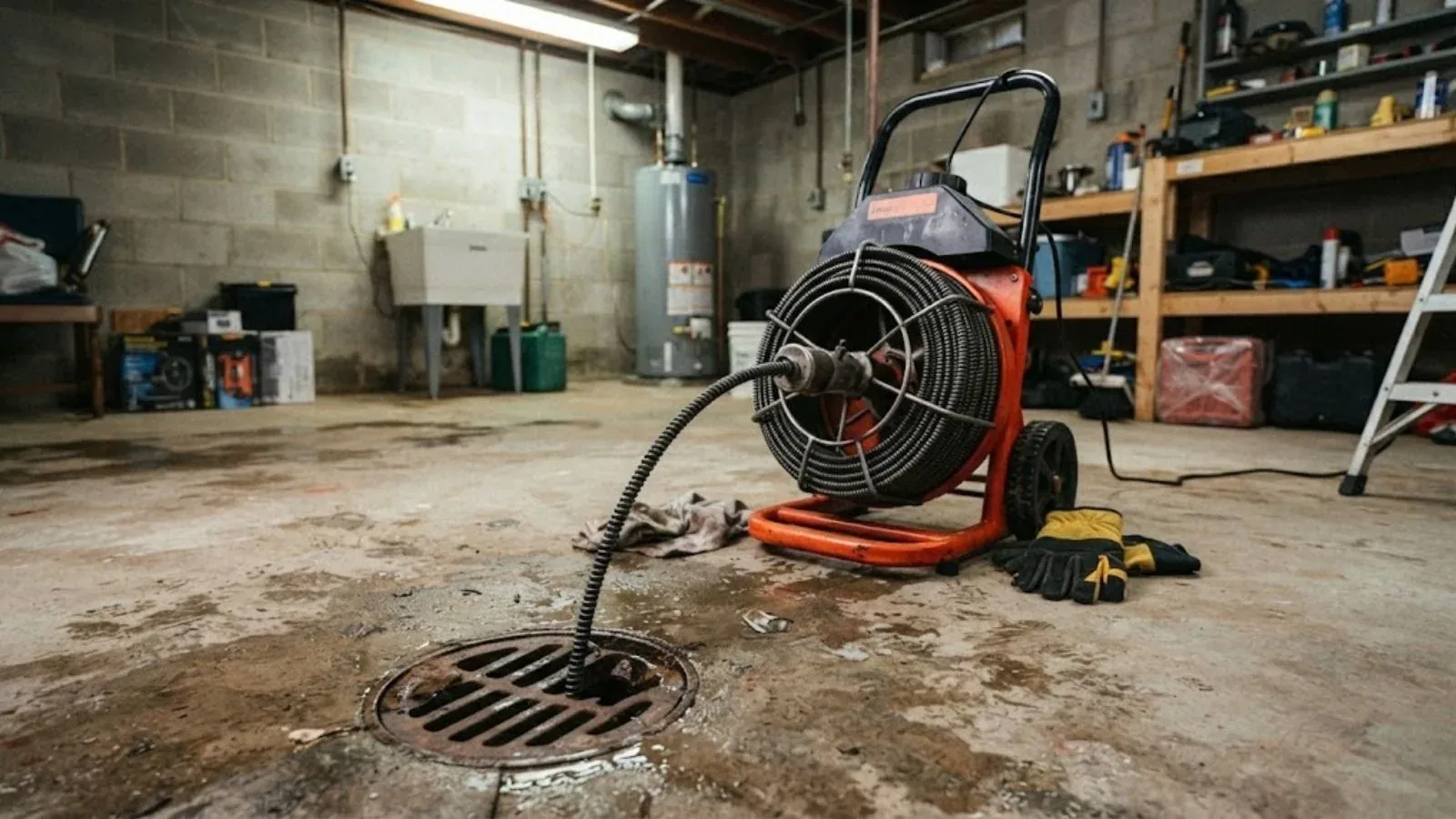
Sewer line cleaning is the clearing of the main drain that carries all wastewater from your house out to the City sewer in the street. It is different from clearing a single sink or tub. When the main line blocks, every fixture is affected, and the lowest drain in the house becomes the overflow. Claremont Express Plumbing sends licensed plumbers to main line backups at any hour.
Sewage is rising: what to do first.
This is the call that cannot wait. If water is coming up in a shower, tub or floor drain, assume the main is blocked and stop adding to it.
Do not flush. Do not run the washer, dishwasher or any faucet. Keep people and pets out of the wet area and avoid touching wastewater with bare skin. If water is near outlets or an extension cord, stay clear and switch off power at the panel only if you can reach it safely. Then call dispatch and describe which drains are affected.
Signs the main sewer line is blocked.
- Sewage or gray water coming up in the lowest tub, shower or floor drain.
- Toilets bubble or drain slowly after you run the washer.
- Every drain in the house is slow at once.
- A strong sewer odor in the yard, garage or near the cleanout.
- Water standing in the cleanout cap area or gurgling from the cleanout.
- Backups that return soon after a simple cabling.
Who owns which part of the line.
This question comes up on almost every backup call, and the City of Claremont gives a clear answer. The City owns and maintains the sanitary sewer main, which usually runs down the middle of the street. The property owner is responsible for the private lateral that runs from the house to that main. The City does not respond to problems inside a private lateral.
The practical step is simple. The City recommends confirming with a plumber that the problem is not the lateral before you call. If the plumber finds the stoppage is in the City main, the Community Services office at (909) 399-5431 takes backup reports from 7am to 6pm Monday through Thursday. After hours, the City points callers to the Police Department non-emergency line at (909) 626-1296. The Engineering Division at (909) 399-5465 can help locate the lateral on your lot.
Why Claremont laterals block.
Most main line stoppages come from four things: roots, grease, paper products and a damaged pipe. The City's sewer system includes vitrified clay, PVC, asbestos cement, ABS and other materials, and its mains run 8 to 15 inches. Private laterals are narrower, often 4 inches, so a small obstruction fills them faster.
Mature trees near a lateral are a common cause. Roots seek moisture and slip into clay joints, where they grow into a mat that catches paper. The City also advises flushing only toilet paper, with no wipes, paper towels or feminine products, since wipes do not break down and blockages cost more in older pipes.
How the main line gets cleared.
Plumbers reach the main through a cleanout, a capped pipe usually at the side of the house or near the property line. A heavy drum machine feeds a cable through it toward the street. Cutter heads chew through roots, and a retrieving head can pull out rags or wipes.
When the line is flowing again, a camera is the honest way to know whether the blockage was a one-off or a symptom of a bigger problem. See sewer inspection for what that looks like. If grease or scale remains on the wall, hydro jetting washes it out.
| Location. | Who handles it. | Typical sign. |
|---|---|---|
| Inside the house branch. | Homeowner with a plumber. | One fixture or group is blocked. |
| Private lateral to the street. | Homeowner with a plumber. | Whole house backs up and cleanout is full. |
| City main in the street. | City of Claremont. | Cleanout is empty but neighbors also report backups. |
| Trunk line downstream. | Sanitation Districts of Los Angeles County, District 21. | Reported through the City. |
Water coming up from a floor drain? Call dispatch.
A licensed plumber can be sent any hour. Stop using water until they arrive.
What the visit looks like.
What happens on site.
- 1.
Locate the cleanout.
The plumber finds the access point and checks whether the line is full or empty, which shows where the blockage sits.
- 2.
Cable the line.
A drum machine with a cutter or retrieving head works through the blockage.
- 3.
Flush and test.
Water is run to confirm the line drains freely end to end.
- 4.
Decide on follow-up.
If roots or debris suggest a damaged pipe, the plumber recommends a camera look.
- 5.
Report the findings.
You hear what was found, where, and what to expect if it returns.
When the backup is not your lateral.
A full cleanout does not always mean your lateral is the culprit. If the line is flowing in your cleanout and still backing up, or if neighbors have the same problem, the blockage may be in the City main.
In that case, the City is the right contact, and a plumber's finding helps you describe it. A quick note on where the cleanout showed water, and whether clearing the lateral had any effect, is useful information for Community Services.
What affects the price of sewer line cleaning.
Cost factors for a main line visit.
A main line job is not a flat product, and these are the factors that move it.
Distance to the blockage.
The farther the cable runs, the longer the job.
Access.
A cleanout makes it simple. Without one, plumbers may work through a toilet flange or roof vent.
Root load.
Heavy roots mean extra cutting passes.
Follow-up equipment.
Jetting or a camera inspection adds time and tools.
When you call.
After-hours dispatch follows a different schedule than daytime appointments.
You get a clear price before work starts, and we explain what we find so you can decide about repair or inspection.
Before the plumber arrives.
Get ready for the visit.
Stop all water use.
Hold off on flushes, showers, laundry and dishwashers.
Uncover the cleanout.
Clear bushes, planters or stored items from the cleanout so the plumber can reach it.
Protect floors and belongings.
Move rugs and furniture away from the affected drain.
Mind the electrics.
If water is spreading near outlets, keep away and cut power only if the panel is dry and safe to reach.
Repeat backups mean a bigger problem.
One backup can be a wad of wipes. Two in a year, or three in two, almost never is. By then the pipe has a defect: an offset joint, a root-filled crack or a belly where solids settle. Clearing the line again buys time. If the camera shows damage, sewer line repair is the honest next step.
Nearby towns.
Neighbors outside town limits can reach dispatch too. See our Montclair plumber page for how we cover the area to the southeast.
Standards and who to verify with.
Sewer repairs in California follow the California Plumbing Code, which rests on the Uniform Plumbing Code (UPC). The City of Claremont says owners are responsible for the private lateral, so ask the plumber to show you the camera footage and verify their license with the Contractors State License Board.
Sewer line cleaning questions.
.
Yes. Dispatch runs 24/7, and licensed plumbers are sent to sewer backups at night, on weekends and on holidays. If sewage is rising, stop all water use, keep people away from the area and call right away. We will help work out whether the problem is the lateral or the City main.
.
The private lateral from your house to the City main belongs to the property owner. The City of Claremont owns the main in the street and does not respond to problems inside a private lateral. Verify with a plumber first, then contact Community Services at (909) 399-5431 if the stoppage is in the main.
.
The City directs after-hours backup reports to the Police Department non-emergency line at (909) 626-1296. Community Services at (909) 399-5431 handles reports from 7am to 6pm Monday through Thursday. A plumber on site can tell you where the stoppage is before you place that call.
.
All the drains join the main line, so a blockage downstream affects them together. The lowest fixture, usually a ground-level tub or floor drain, shows the problem first. A single slow sink is a drain cleaning job. Multiple fixtures at once usually point to the main.
.
Yes, even ones labeled flushable. They do not break down like toilet paper and tangle with roots and grease. The City advises flushing only toilet paper because blockages cost more in older pipes. Paper towels and feminine products cause the same trouble.
.
Look for a capped pipe, usually 3 or 4 inches wide, near the foundation or the side of the house, sometimes by the property line. If you cannot find it, the City Engineering Division at (909) 399-5465 can help locate the lateral, and the plumber will look when they arrive.