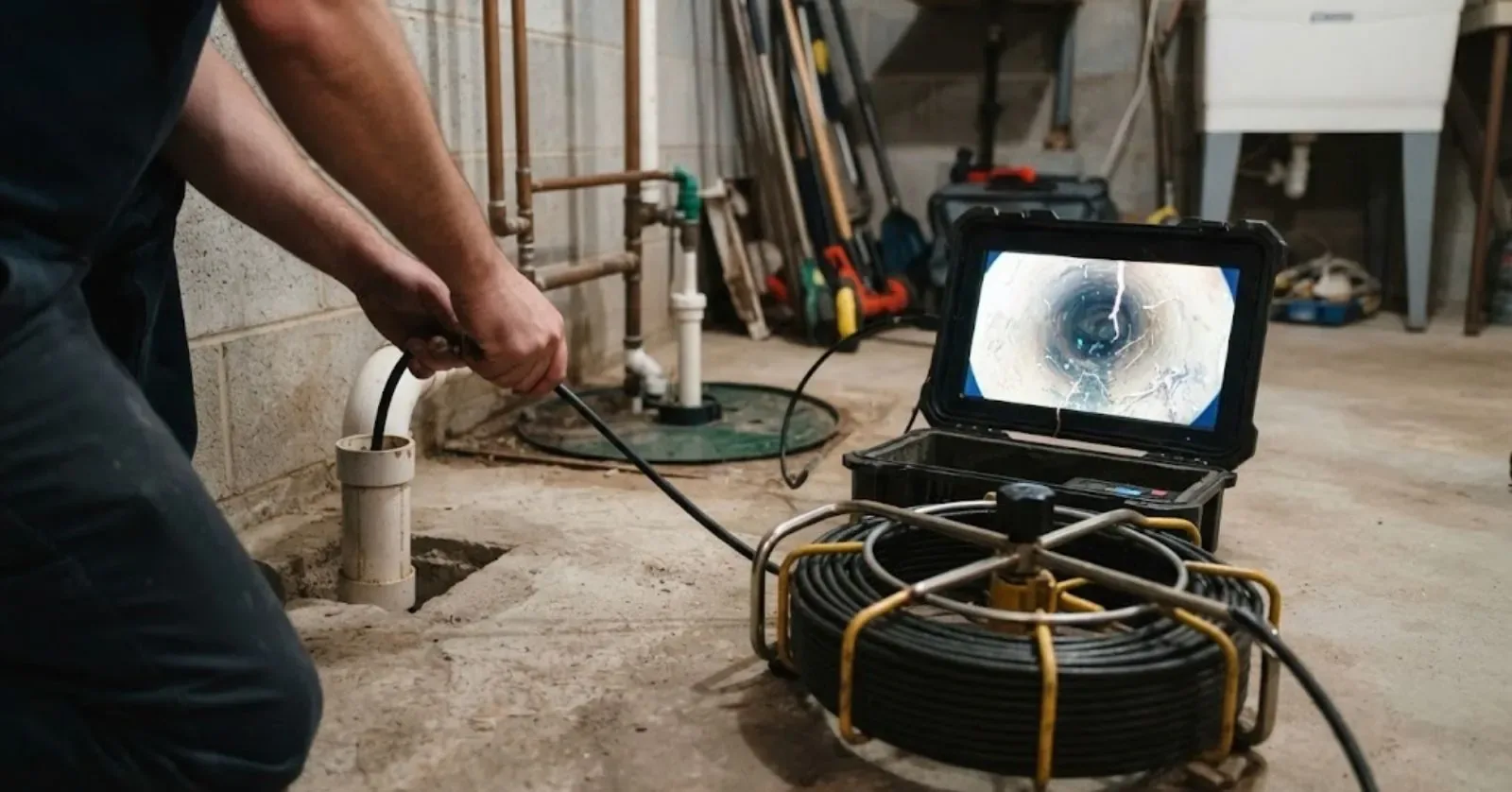
A sewer inspection is a video examination of the pipe that carries wastewater from your house to the City main. A small waterproof camera on a flexible rod is pushed through a cleanout, and the plumber watches a live feed while recording. In Claremont it is the most direct way to learn the condition of a private lateral before a purchase, a repair or any digging.
Why people book a camera visit.
Most people call for a camera inspection for one of four reasons. Each one has a different question behind it, so the visit is adapted to match.
- You are buying a home and want to know what the lateral looks like before closing..
- A drain has backed up and you want to know why, and not only clear it..
- You plan to dig, plant trees or build, and need to know where the line runs..
- You have a repeat clog and suspect a break..
Buying a Claremont home.
A home inspector looks at what is visible. The lateral is buried, and a problem there can become the buyer's cost on day one. The City of Claremont says the property owner is responsible for the private lateral from the house to the City main, which is usually in the middle of the street. That makes it your line as soon as the sale closes.
Claremont has older neighborhoods with Craftsman, Victorian and Spanish Colonial Revival homes in the historic core. If you are looking at one, ask whether the sewer line has ever been replaced and ask for the camera to be run. The footage can support a negotiation and gives you a baseline to compare against later. Buying just outside town? See our Pomona plumbing page for the area we serve.
Reasons to run a camera.
- A home purchase where the lateral has no documented history.
- A drain backup that cabling cleared, but you want the cause.
- Slow drains throughout the house with no single bad fixture.
- Soggy ground, odor or sinking soil over the sewer path.
- An older home with clay, cast iron or unknown pipe.
- Planned excavation, landscaping or a remodel near the line.
What the camera finds.
The footage is only useful if someone reads it properly. A plumber looks for specific defects.
Roots appear as white hair-like growth or a thick mat at joints. Cracks show as lines along the pipe, sometimes with soil visible behind them. An offset is a joint where the two pipe ends no longer line up. A belly is a low section where water sits and solids collect. Scale, grease and debris show up as rough buildup on the wall, and a collapse shows as a flattened or missing pipe.
| Finding. | What it suggests. | Likely next step. |
|---|---|---|
| Light roots at a joint. | Open joint, early stage. | Cutting or jetting, and monitor. |
| Cracked or broken pipe. | Failure that will keep letting debris in. | Spot repair or lining, see sewer line repair. |
| Offset joint. | Soil movement or poor installation. | Repair, since cleaning will not fix it. |
| Belly or sag. | Grade problem collecting solids. | Often a dug correction. |
| Heavy grease or scale. | Buildup from use and hard water. | Hydro jetting. |
Before you dig anything.
Digging on a lot without knowing where the line runs is a bad bet. A camera with a locator transmitter lets the plumber mark the path and depth above ground, so a trench, a tree, a pool or a patio avoids the pipe.
The City's Engineering Division at (909) 399-5465 can help locate the lateral. For any permit questions about the dig itself, ask the Claremont Building Division at (909) 399-5477 instead of guessing. The camera does not replace those calls. It gives you better information to bring to them.
Planning a purchase or a dig? Call to book an inspection.
A licensed plumber can schedule a camera visit and explain what the footage shows.
After a backup.
If sewage backed up and the line was just cleared, the inspection answers the follow-up question: was it a one-time blockage or a sign of something worse? Run soon after cleaning, the camera has a clear view without debris in the way.
A pipe that is clean and round with sound joints is good news. A pipe full of roots or cracks means the next backup is a matter of time. Our sewer line cleaning page covers what happens when the main blocks.
What happens on an inspection visit.
Inspection sequence.
- 1.
Find the cleanout.
The plumber locates the access point, or pulls a toilet if there is none.
- 2.
Run the camera.
The rod is fed toward the street while the plumber watches the live feed.
- 3.
Record and mark.
Footage is saved and any defects are noted by distance from the cleanout.
- 4.
Locate on the surface.
A locator marks the path and depth of any problem spot.
- 5.
Walk through the results.
You see the footage and hear what is found and what, if anything, to do next.
What affects the price of a sewer inspection.
Cost factors for a camera visit.
Inspections are priced by what the job involves, so these are the factors to expect.
Access.
A cleanout makes it quick, and no cleanout adds work.
Line length.
A longer run to the City main takes more time.
Cleaning first.
A line full of debris may need cabling or jetting before the camera sees anything useful.
Locating.
Marking the path and depth above ground is extra equipment and time.
Written report or video copy.
Useful for a purchase or a repair bid.
You get a clear price before work starts, and the inspection is explained to you in plain terms.
Preparing for the visit.
Before the plumber arrives.
Find the cleanout.
A capped pipe near the foundation or side yard is usually the entry point.
Clear access.
Move plants, bins and stored items away from it.
Share the history.
Past backups, root trouble and earlier repairs help the plumber interpret what the camera shows.
Hold off on heavy water use.
Avoid laundry or long showers just before the visit so the line is not running full.
Get the footage, not just the verdict.
A summary that says the line is fine or needs work is a claim. A recording is evidence. Ask for a copy of the video and the distance marks, especially before a purchase negotiation or when comparing repair bids. It lets a second plumber see the same pipe without paying for another inspection.
What a good inspection report rests on.
A camera inspection finds the problem, and any repair that follows is judged against the California Plumbing Code, built on the Uniform Plumbing Code (UPC). Keep the footage, and use the Contractors State License Board's Check a License tool before hiring the repair.
Sewer inspection questions.
.
It depends on the length of the line, the access and whether the pipe needs cleaning first. A straightforward run with a clear cleanout is faster than one that needs a toilet pulled or a blockage cleared. Ask dispatch about timing when you call, since no two lines are alike.
.
Many buyers do. The lateral is buried and is the property owner's responsibility under City of Claremont rules, so a hidden crack or root problem becomes yours at closing. The footage gives you a basis to negotiate, plan repairs or walk away informed.
.
Not until the blockage is cleared. A line full of water or debris hides the pipe. In that case the plumber cables or jets first, then runs the camera. See drain cleaning for how stoppages are cleared.
.
Yes, when paired with a locator. The transmitter on the camera head lets the plumber mark the pipe's path and depth at the surface. That helps you avoid it or reach a repair spot without opening more ground than necessary.
.
No. The City maintains the sewer main and does not respond to problems inside a private lateral. The Engineering Division at (909) 399-5465 can help locate it, and a plumber can inspect it. If the camera shows the problem is in the main, the City's Community Services is the contact.
.
Cabling clears a blockage but does not show why it formed. A camera shows roots, cracks, offsets, sags and buildup, so you learn whether a backup was random or a warning.