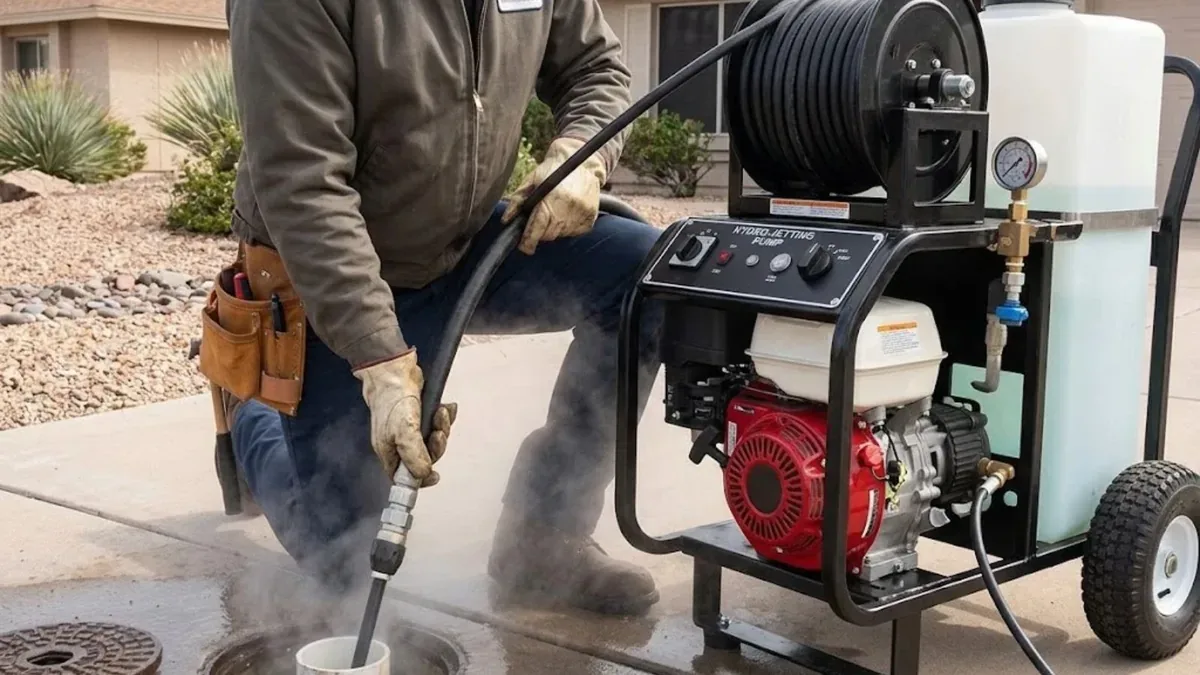
Hydro jetting is a method of cleaning a drain or sewer line with a stream of water at very high pressure, delivered through a flexible hose with a specialized nozzle. The water cuts through grease, scale, silt and root hairs and flushes the debris downstream. Claremont Express Plumbing dispatches licensed plumbers for jetting at any hour, which matters most when a line has backed up and cabling alone did not hold.
The clog that keeps returning.
Picture the usual story. A plumber cables the line, water runs fine for three weeks, then the same fixtures slow down again. That pattern means something is still lining the pipe.
A cable punches a hole through a blockage. It does not remove the sludge ringing the pipe wall. Each pass leaves a narrower channel, and a rough surface collects new grease and paper quickly. Jetting washes the full circumference, so the pipe returns to something close to its original bore.
When jetting is worth asking about.
- A drain that clogs again within weeks of being cabled.
- Slow drains throughout the house with no single fixture to blame.
- Grease buildup in a kitchen branch or a restaurant-style line.
- Tree roots reported by an earlier camera inspection.
- Sewage smell near a cleanout that keeps coming back.
- Scale from hard water narrowing older iron or galvanized pipe.
Why Claremont pipes load up.
Claremont Water System supply blends treated groundwater with imported State Water Project water. Golden State Water Company's 2026 water quality report lists hardness between 97 and 330 mg/L, averaging 190 mg/L, or about 11 grains per gallon. Hard water leaves mineral scale inside drains over time, and rough scale is where grease and lint catch.
The City of Claremont also lists vitrified clay, asbestos cement and other older pipe materials in its sewer system. If your house is on an older lateral, clay joints are a common place for fine roots to enter. Jetting works well on root hairs and silt. A thick, woody root mass is better cut first with a cutter head, then jetted.
How a jetting nozzle works.
The jetter is a pump and a hose reel. Water goes through a nozzle with several rearward-facing jets that pull the hose forward through the pipe. Forward jets break up the stoppage, and the rearward streams scrub the wall and push debris back toward the opening where it can be flushed out.
Nozzle choice depends on the job. A narrow nozzle suits a 2 inch kitchen branch. A heavier, multi-jet head works in a 4 inch lateral. Pressure is set to the pipe, since an older or damaged line should not be blasted at full force.
| Method. | What it does. | Trade-off. |
|---|---|---|
| Cabling. | Opens a channel through a blockage. | Leaves residue on the pipe wall. |
| Hydro jetting. | Scours the whole pipe interior. | Not suited to pipe that is already cracked or collapsed. |
| Chemical cleaner. | Dissolves some organic buildup. | Can harm old fittings and does nothing for roots. |
| Cable then jet. | Clears a hard stoppage, then cleans the wall. | Two steps on site, but most thorough on severe clogs. |
Sewage backup emergency: what to do if sewage is already coming up.
If wastewater is rising in a tub, shower or floor drain, treat it as urgent. Stop using water, keep children and pets away from the area and call dispatch. Wastewater carries bacteria, so avoid touching it with bare hands.
Our plumber often starts with a camera or a cable to find where the line is blocked, then decides whether jetting is safe for the pipe. If the line is blocked by something solid, like a collapsed section or a foreign object, jetting will not clear it and the repair route changes. Our sewer line cleaning page explains how main line backups are handled.
Backed up and cabling did not last? Call dispatch.
Tell us what has been tried and a licensed plumber can plan a jetting visit.
What happens on a jetting visit.
Visit sequence.
- 1.
Find the access point.
A cleanout is ideal. If there is none, the plumber may pull a toilet or use a roof vent.
- 2.
Inspect first.
A camera or test run checks that the pipe can take the pressure.
- 3.
Run the nozzle.
The hose is fed in and pulled back slowly, working each section more than once.
- 4.
Recover the debris.
Flushed material is washed to the main or captured at the cleanout.
- 5.
Confirm the result.
Water is run through the line and, when a camera is used, the pipe is viewed again.
Limits worth knowing.
Jetting is not a cure for a broken pipe. If a camera shows an offset joint, a collapsed section or a long sag, water pressure can wash more soil into the line. In that case the right next step is sewer line repair, not another cleaning.
Pipe age matters too. Brittle old material may not tolerate high pressure, and the plumber should say so before starting. Honest advice sometimes means a gentler cable job.
What affects the price of hydro jetting.
Cost factors for a jetting visit.
Jetting costs more than a basic cabling because the equipment is bigger. These are the factors that move the number.
Pipe length and diameter.
Longer and wider lines take more time and water.
Access.
A clean outdoor cleanout is faster than removing a toilet.
Severity of buildup.
Light grease takes a pass or two. Heavy scale or roots take repeated passes.
Camera work.
A before and after look adds time and gives a record of the result.
After-hours dispatch.
Night and weekend calls follow a different schedule than daytime appointments.
You get a clear price before work starts, and we will tell you plainly if jetting is the wrong tool for what the line needs.
Before the plumber arrives.
Prepare the site.
Stop using water.
Keep sinks, toilets, showers and washers off so the line does not fill further.
Find the cleanout.
Look for a capped pipe near the foundation or along the side of the house and clear plants or stored items from it.
Protect the floor.
If a floor drain or tub is backing up, move rugs and belongings away from it.
Keep power off wet areas.
If water is near outlets or appliances, stay away and shut off power at the panel only if it is safe to reach.
Jetting cleans, it does not fix.
A freshly jetted pipe is a clean pipe, nothing more. If roots return, the joint they used is still open. If grease returns, the habits upstream are unchanged. For homes with chronic problems, a periodic jet pairs with a camera look from sewer inspection so you can see how fast the pipe is refilling.
Where the rules come from.
Jetting itself is a cleaning method, but any pipe repair that follows falls under the California Plumbing Code, a state code built on the Uniform Plumbing Code (UPC). A camera inspection should come first, and the plumber's license can be checked on the Contractors State License Board site.
Hydro jetting questions.
.
Yes. Dispatch takes calls around the clock, and licensed plumbers are sent to backups and severe clogs at night, on weekends and on holidays. If sewage is rising, stop all water use and call right away. The plumber will decide on site whether jetting or cabling is the safer first step.
.
It depends on the pipe. Sound clay, cast iron and plastic usually handle it with the pressure set correctly. Cracked, collapsed or badly corroded pipe may not. That is why a camera or test run often comes first, and why the plumber adjusts pressure rather than using full force.
.
It clears fine root hairs well and flushes them out. A heavy root mass is usually cut with a cutter head first and then jetted. Roots tend to regrow if the joint they entered is still open, so a repeat problem points toward repair or relining rather than more cleaning.
.
A snake is a rotating cable that breaks or hooks a blockage and opens a channel. Jetting uses pressurized water to wash the entire pipe wall. For a one-time clog, a drain cleaning visit with a cable is often enough. For grease, scale or repeat clogs, jetting cleans more thoroughly.
.
Used correctly, it should not. Damage usually comes from too much pressure on weak pipe. A responsible plumber inspects first, sets pressure to the material and stops if the line shows signs of failure. If a pipe is already broken, jetting can wash soil into it, so the plan changes.
.
No. The City of Claremont maintains the main in the street. The private lateral from your house to the main is the property owner's responsibility, and the City does not respond to problems inside it. Have a plumber confirm where the problem is before you call the City.