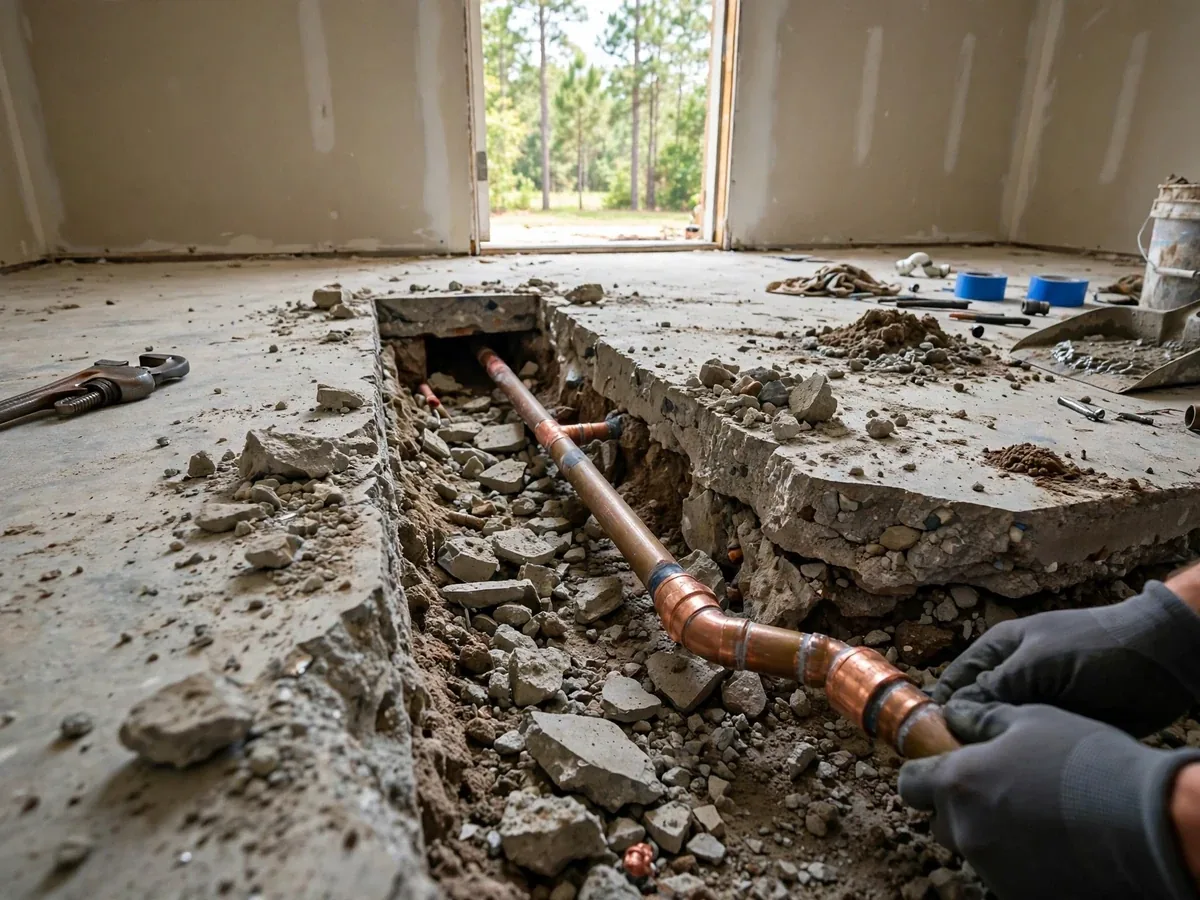
How a slab leak shows itself.
A slab leak is a leak in a pressurised water line that runs under or through the concrete slab of a house. You never see the pipe, so you notice the side effects. Hot water lines are the usual suspects, which is why a warm spot on a tile or wood floor is the classic clue.
The clues stack up. Some people hear water running in the walls with every fixture off. Others find a damp carpet edge, a baseboard that swells, a bill that jumped, or a water heater that seems to run constantly because hot water is leaking out below.
Signs of a slab leak.
- A warm or hot spot on the floor, with no heating system explanation.
- The sound of running or hissing water with all fixtures closed.
- The meter needle moves when everything inside is off.
- Damp carpet, lifting laminate or cracked tile in one area.
- Unexplained mold or musty smell from the floor.
- A sudden drop in hot water pressure.
- A water heater that cycles all day.
Meter running and no wet spot in sight.
Since the concrete hides everything, the meter is your best first test. Turn off all water inside and outside, then watch the meter. Golden State Water Company says a moving needle likely means a leak on the property. Next, close the main valve at the house and look again. A stopped needle points inside the house.
If the leak is inside and the yard is dry, a slab leak climbs to the top of the list. Leaks beyond the meter are the property owner's responsibility, so the repair is yours. Dispatch can help you read the meter over the phone.
A hot or wet floor right now is urgent.
Slab leaks are urgent because the water has nowhere to go but down. It washes away soil under the slab, soaks the base of walls, and can lift flooring. If the floor is hot or wet right now, close the main valve, turn off the water heater if you can reach its controls safely, and call.
Stay out of standing water near outlets. Switch off power to the affected room only if you can reach the panel without stepping through water. Gas water heaters have their own rules: if you smell gas, leave the building, then call SoCalGas at 1-800-427-2200 from a safe place, and 911 if life may be in danger.
How plumbers trace a slab leak.
We never jackhammer on a hunch. A trace starts with the meter test and pressure readings on the system. Then we listen with an electronic ground microphone, sweeping the floor and slowly narrowing where the noise is loudest. A thermal camera picks up heat in hot lines. Isolation tests close off sections of piping so we can see which branch loses pressure.
Where the pipe layout is unclear, a pipe locator helps map the lines under the floor. The goal is a spot the size of a dinner plate, not a trench across your living room.
| Option. | Best for. | Trade-off. |
|---|---|---|
| Spot repair through the slab. | One clear leak in a reachable line. | Concrete is cut and patched, and nearby pipe of the same age may fail next. |
| Reroute through walls or attic. | Lines that keep failing under the slab. | Opens drywall and ceilings, but avoids more floor work. |
| Repipe the affected loop. | Several pinhole leaks or corroded copper. | Highest upfront work, longest-lasting fix, see repiping. |
| Epoxy lining. | Some lines where access is poor. | Not suited to every pipe, and not every installer offers it. |
Picking between a patch, a reroute and a repipe.
A spot repair is the cheapest in the short term and often the right call when the pipe is otherwise sound. It stops being the right call when the pipe is pitted, the leak is the second one, or the house has hard water that keeps eating copper from inside. Claremont's Golden State Water supply averages about 190 mg/L hardness, around 11 grains per gallon, per its 2026 report, so scale and corrosion are normal conversations here.
A reroute leaves the slab alone. New lines run overhead or in walls, which many owners prefer because future leaks are easy to reach. The trade-off is drywall work and a longer job. A full repipe costs the most but resets the clock on the whole system. We give you the numbers and our honest view of which one the pipe in front of us deserves.
Floor warm or meter spinning?.
A licensed plumber can trace the leak and walk you through your options. Call dispatch any hour.
What happens on a slab leak visit.
- 1.
Confirm the leak.
Meter and pressure tests tell us whether water is escaping under the slab.
- 2.
Locate it.
Acoustic and thermal tools mark the spot on the floor.
- 3.
Weigh the options.
You hear the choices, trade-offs and cost drivers before work begins.
- 4.
Repair or reroute.
We open only what we need, fix or replace the line, and pressure-test it.
- 5.
Close up.
We explain what flooring, concrete or drywall work remains for you.
What drives the cost of a slab leak repair.
The leak and the flooring above it decide most of the price, so the quote follows the trace.
Depth and location.
A leak under a bathroom differs from one under a long hallway.
Floor covering.
Tile, hardwood and carpet each add different restoration work.
Pipe condition.
One leak in good pipe is a spot fix. Pitted pipe argues for more.
Chosen method.
Spot repair, reroute and repipe have very different scopes.
Water damage.
Wet insulation, drywall and subfloor may need drying out.
You get a clear price before work starts. Insurance coverage varies, so ask your own carrier what they cover for hidden leaks.
What to do before the plumber arrives.
Shut the main valve.
Turn it clockwise. If it will not move, tell dispatch.
Clear the floor.
Move rugs, furniture and electronics away from the warm area.
Mark what you noticed.
Tape a note on the warm spot or write down where you hear water.
Photograph for records.
Take photos of damage in case your insurer asks.
Why a slab leak is not a DIY patch.
Epoxy tape and sealants from a store will not stop a leak under pressure inside concrete, and they hide the clue we use to find it. If the repair involves cutting a slab or repiping, ask the Claremont Building Division at (909) 399-5477 whether permits apply. We can describe the scope so your call is quick.
Code and licensing for slab work.
Slab repairs and reroutes must follow the California Plumbing Code, a state code built on the Uniform Plumbing Code (UPC). Ask the Claremont Building Division at (909) 399-5477 whether a permit applies, and confirm the plumber's license with the Contractors State License Board.
Slab leak questions.
.
Yes. Dispatch is open around the clock for urgent slab leaks, hot floors and runaway meters. Close the main valve and tell the dispatcher what you see. A licensed plumber can be sent same day when available, and we help you protect the floor while you wait.
.
A warm patch that stays warm when the heater is off, especially near a hot water line path, is a strong clue. Combine it with a moving meter or running water sounds, and a slab leak becomes likely. A plumber confirms it with pressure tests and listening tools before anything is cut.
.
No. Spot repair opens the slab in one place, but rerouting the line through walls or attic avoids the slab altogether. The right choice depends on pipe condition and how many leaks you already had. We explain each path and what it disturbs.
.
Close the main valve at the house and watch the meter. If the needle stops, the leak is inside the house, which often means the slab. If it keeps moving, the buried service line outside is the likelier source. Our leak detection page covers that test.
.
It can over time. Water that escapes under a slab can wash out soil and soften the base. That is one reason to act on a warm floor or running meter quickly. A plumber can look at the pattern and tell you what to watch.
.
Golden State Water maintains lines up to the meter. Pipes after the meter, including those under your slab, belong to the property owner. If the cause could be a burst section, our burst pipe repair page explains shutoff steps.