The fast answer: test the meter before you blame the bill.
A water meter leak shows up as a meter that keeps counting when nobody is using water. To check, shut off every tap, appliance, sprinkler and hose bib, then look at the meter dial or the small triangle or wheel that spins at low flow. If it still moves after a few minutes, water is going somewhere on your side of the line.
Golden State Water Company, which runs the Claremont Water System, describes the same test on its own FAQ. Its two most common causes of a high bill are irrigation problems and leaks, so the next job is working out which one you have.
Walking through the meter test properly.
Most meters sit in a box near the curb under a metal or plastic lid. Pop it with a screwdriver, keep your fingers clear, and wipe the glass if it is fogged.
Before you start the clock, make sure nothing is drawing water. The ice maker, washing machine and any softener should be idle. A toilet that refills now and then will fool you, so peek inside each tank.
- Note the position of the sweep hand or the low-flow indicator..
- Wait ten to fifteen minutes with all water off..
- Look again. Any movement means a leak or a running fixture..
- Turn off the main valve at the house, if you have one, and check once more..
That last step is the one that narrows things down. If the dial stops once the house main is closed, the leak is inside the house or on the house side of that valve. If it keeps turning, the leak is between the meter and the valve, usually in the buried line.
Irrigation problems versus a real leak.
Sprinklers cause plenty of surprise bills, and they are easy to confuse with leaks. A stuck valve can run a zone for hours. A cracked riser or a broken head can pour out water in a spot that looks like normal lawn dampness. A drip line that has been chewed by a squirrel can waste water for weeks without any pooling at all.
Run the meter test with the irrigation controller switched off and the irrigation valves closed. If the needle stops, the sprinklers were the culprit. Then walk each zone while it runs and look for geysers, soggy patches, and heads that mist instead of spray.
Signs the leak is somewhere other than the sprinklers.
- The meter moves with the irrigation controller off.
- A damp or unusually green strip of lawn that is not in a sprinkler zone.
- Water hissing or running sounds near the front hose bib or the house wall.
- Low water pressure at every faucet at once.
- A warm patch on a floor, or a floor that feels spongy.
- Musty smells or new mildew on a baseboard.
- Hot water that takes forever to arrive, or a water heater that seems to run constantly.
Whose pipe is it? The line at the meter.
The meter is the dividing line, and it matters when money is involved. Per Golden State Water's FAQ, the utility maintains the lines up to the water meter, and a leak beyond the meter is the property owner's responsibility. So a geyser on the street side is a call to the utility, and a wet yard between the meter and your front door is yours to fix.
Local note
Claremont water meter and who handles what.
Golden State Water Company serves Claremont through the Claremont Water System, and its customer FAQ says the company maintains lines up to the water meter. It says leaks beyond the meter are the property owner's responsibility.
The same FAQ gives a simple leak check. Turn off all water inside and outside the home, then watch the meter needle. If the needle keeps moving, there is likely a leak on the property. The company also names irrigation problems and leaks as the two most common causes of a high bill.
Golden State Water has a 24-hour Customer Service Center at 1-800-999-4033, or locally at 909-394-2272. Call it first if you think the problem is on the utility's side of the meter.
Where a hidden leak usually hides.
Once you know the leak is on your side, the question is where. Plumbers work through it in a set order, starting with the easiest places to rule out.
Toilets come first, because a worn flapper can lose a startling amount of water without a sound. Drop a few drops of dye in the tank, wait, and see if color shows up in the bowl. Next come outdoor spigots and the hose connection, then the water heater's relief valve and the supply lines under sinks.
If all of that is dry and the meter still moves, the leak is probably buried. Suspects include the line from the meter to the house, a pipe feeding a detached garage, and a line under the slab.
Slab leaks often announce themselves with a warm spot on the floor or running water sounds in a quiet house. A slab leak repair visit starts with tracing, not digging.
What a plumber does to find it.
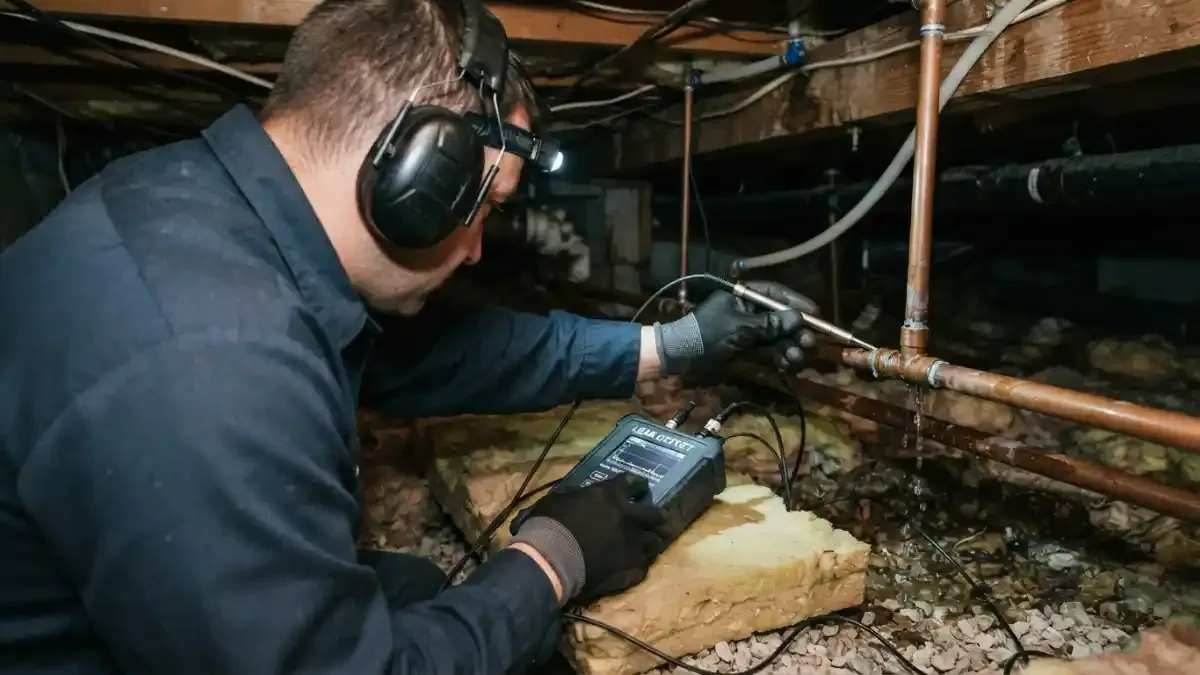
Guessing is expensive. A good leak locator will isolate sections of pipe with test plugs, pressurize them, and watch a gauge for pressure drops. Acoustic listening equipment then picks up the hiss of escaping water through soil, concrete or tile, and a pipe locator marks where the line actually runs so the trace stays accurate.
For hot water lines, thermal imaging can show a warm path under flooring. The goal is a marked spot, so any opening up is small and in the right place.
| Cause. | How it shows up. | Usual next step. |
|---|---|---|
| Toilet flapper. | Quiet trickle in the bowl, meter creeps. | Replace flapper or fill valve. |
| Irrigation valve or head. | Meter stops when controller is off. | Repair the valve, riser or head. |
| Buried service line. | Meter runs with house main closed. | Locate and repair or replace the section. |
| Slab leak. | Warm floor, hissing, low pressure. | Trace, then spot repair or reroute. |
| Water heater relief valve. | Drip at the discharge pipe. | Inspect valve and tank pressure. |
| Supply line or shutoff. | Damp cabinet or wall. | Replace the failed part. |
Water running where it should not be?.
Call dispatch and a licensed plumber can trace the leak and explain the options before work starts.
Repair or replace the buried section.
Not every buried leak means digging up the whole yard. A single pinhole in a copper line may be fixed with a short spot repair. A line that has leaked in more than one place, or that has gone thin from age or soil, is often better replaced in one go, and in some homes that conversation turns toward repiping if the interior plumbing shows the same wear.
A spot repair disturbs less ground but leaves the old pipe in service. Replacement takes longer but removes the weak points. Ask the plumber to show you the failed section.
What drives the price of a leak fix.
No honest plumber can name a number before seeing the job, because the same meter symptom covers a ten minute flapper swap and a trenching job. The big variables are how deep the pipe is, what sits above it (lawn, concrete, tile or a driveway), how long the run is, and how easy it is to reach the shutoff.
Pipe material matters too, and so does whether the line has one leak or many. Water damage cleanup is its own line item, which is why catching a leak early pays off.
Permits and the city side.
Whether a repair needs a permit depends on the job, and this site does not make that call for you. Ask the Claremont Building Division at (909) 399-5477 before any pipe replacement begins, and let your plumber know what they say.
Neighbors in Pomona and Montclair have different water providers, so check their meter rules rather than assuming Claremont's setup applies.
Where this guidance comes from.
The meter test follows Golden State Water Company's customer guidance, and repairs fall under the California Plumbing Code, built on the Uniform Plumbing Code (UPC). A plumber's license can be verified with the Contractors State License Board.
Questions about high water bills and meter leaks.
.
Turn off every faucet, appliance and sprinkler, then watch the meter. A meter that is completely still means no leak on your side. A needle or small flow indicator that keeps turning after ten or fifteen minutes points to a leak or a fixture that is running, such as a toilet with a worn flapper.
.
According to Golden State Water Company's FAQ, the utility maintains the lines up to the meter, and a leak beyond the meter is the property owner's responsibility. That means the buried line between the meter and the house is yours, and a plumber, not the utility, repairs it. Call the utility if you suspect trouble on its side of the meter.
.
Yes. A flapper that does not seal lets water leak from the tank into the bowl all day, and some toilets lose a great deal this way without making noise. Dye in the tank shows it quickly. The fix is usually a flapper or fill valve, and a plumber can handle it on the same visit as a broader leak check.
.
Do the meter test first. If the leak appears to be on the street side of the meter, call Golden State Water's 24-hour line. If the leak is on your side, or you cannot tell, a plumber can find it with leak detection tools and tell you what the repair involves.