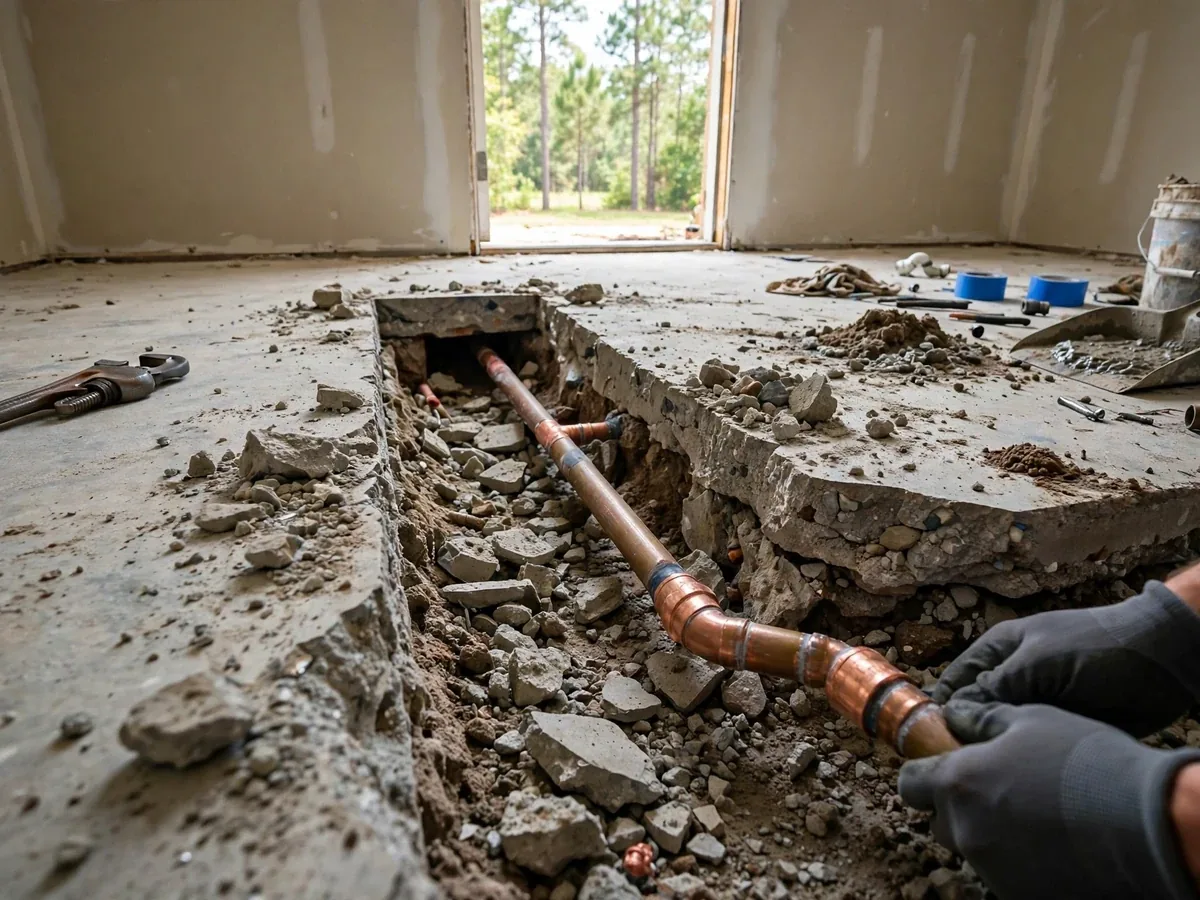
The short answer: five signs worth acting on.
If your home sits on a concrete slab, the strongest slab leak warning signs are a warm patch on the floor and the sound of running water when every fixture is off. Others are a water meter that keeps turning, a sudden jump in the water bill, and damp flooring or baseboards with no obvious source.
One sign alone can have another cause. Two together deserve a call. Water under a slab does not go away on its own, and it keeps eating soil and flooring until someone traces it.
Why pipes under a slab fail.
A slab leak starts where a pipe runs through or beneath concrete. Copper lines can pit from the outside when water and minerals attack the metal, or wear thin at a bend where the pipe rubs on gravel after years of expansion and contraction. A joint can let go. Pressure surges make weak spots worse.
Plastic pipe fails differently, usually at a fitting or where it was kinked during installation. Hot water lines leak more often than cold ones because heat speeds up wear on the metal and the joints. If you see trouble on the hot side first, that is a clue the plumber will use.
Warning sign by warning sign.
A floor that feels warm underfoot.
A hot spot on tile, laminate or carpet is the classic one. A leaking hot line warms the slab above it, and you may feel the heat barefoot in one patch while the rest stays cool. Watch for a water heater that seems to run constantly or never catches up, which can point to hot water escaping somewhere.
Sound of running water with nothing on.
Walk the house when it is quiet. A faint hiss, trickle or rushing noise near a wall or under a floor, while every tap and appliance is off, suggests a pressurized pipe is open to the ground.
Meter movement and bill creep.
This is the check you can do in two minutes. Shut off all water inside and outside, then look at the meter. A needle or flow indicator that keeps moving means water is going somewhere. A bill that rises month after month without any change in how you live tells the same story.
Wet spots, cracks and smells.
Damp carpet edges, floor tiles that lift or crack in a line, a musty odor, mold along the base of a wall, or water seeping up at the slab edge all point to moisture that is traveling. A slab crack alone is not proof. A crack plus dampness plus a warm spot is a different conversation.
Weak hot water or low pressure.
If pressure drops at the faucets with no clear reason, water may be spilling out before it reaches them. This is the vaguest sign, so treat it as support for the others.
Quick self-check before you call.
- The floor is warm in one spot, not across the house.
- The meter moves with every fixture and appliance off.
- You hear hissing or trickling in a quiet house.
- The water bill climbed with no change in use.
- Flooring is damp, bubbling or lifting in a line.
- The water heater runs more than it used to.
What a plumber does to prove it.
Guessing is expensive, because opening a slab is a major job. A good tech confirms the leak and its location first. The usual sequence is a pressure test that isolates the supply lines, acoustic listening with a ground microphone, electronic leak detectors that pick up sound or tracer gas, and sometimes thermal imaging for a hot line. These are the same methods behind leak detection work in general.
Once the area is marked, the plumber can say whether the leak sits under a bedroom, a kitchen island or a hallway, and which repair path fits.
Hearing water with every tap off?.
Shut off the main if the floor is wet and call the dispatcher for a same-day plumber when available.
Repair paths in plain terms.
No single fix suits every house. Here is how the common approaches compare.
| Method. | How it works. | Trade-off. |
|---|---|---|
| Spot repair through the slab. | Cut the concrete over the leak, replace the bad section. | Direct, but breaks flooring and concrete. |
| Reroute overhead or in the wall. | Abandon the leaking line and run new pipe above the slab. | Avoids the slab, opens walls and ceilings. |
| Epoxy lining. | Coat the inside of the pipe to seal pinholes. | Less demolition, depends on pipe condition. |
| Repipe. | Replace the affected lines or the whole system. | Best if the pipe is failing everywhere, largest scope. |
Which is right depends on where the line runs, how many leaks the testing finds, the pipe material and what flooring sits on top. A single pinhole in a short run is a very different job from three leaks in aging copper. That is why most slab leak repair conversations start with a diagnosis, not a quote.
What to do in the first hour.
You do not need to rip anything up. Do the following.
- Turn off the water at the house main shutoff if the floor is wet or you hear a leak..
- Open one low faucet to relieve pressure and drain the lines..
- Move rugs and furniture off damp flooring and run a fan, but stay away from outlets and power strips near standing water. Switch off power to that area only if you can do it safely..
- Take note of when you first noticed the signs, which rooms are affected and whether the hot or cold side acts up..
- Call a licensed plumber. Do not run a water-using appliance to see if it gets worse..
What affects the repair cost.
Cost posts rarely help without context, so here are the real drivers instead of a number.
- Depth and location of the leak under the slab.
- Number of leaks found, one or several.
- Flooring type, since stone and engineered wood cost more to restore.
- Pipe material and age.
- Access to the area, such as under a cabinet or a built-in.
- Whether a repipe is smarter than another patch.
Restoration of flooring, drywall and paint is normally separate from plumbing labor, so ask what the quote covers.
Mistakes that make slab leaks worse.
People wait. A damp spot becomes a soft spot, and soaked soil can shift under the slab. Others try a sealant or a topical product on the floor, which hides symptoms without fixing the pipe. A third mistake is calling only a flooring contractor, who can replace the boards but not find the line.
Local note for Claremont and nearby towns.
Local note
What Claremont homeowners should know about the meter and ownership.
Golden State Water Company runs the Claremont Water System. According to its customer FAQ, the utility maintains its lines up to the water meter, and a leak beyond the meter is the property owner's responsibility. That includes the service line that runs from the meter to your house, and any pipe under the foundation.
The same utility FAQ describes the meter test: turn off all water inside and outside, then watch the needle. If it keeps moving, there is likely a leak on the property. It also says irrigation problems and leaks are the two most common causes of a high bill, so check sprinkler zones before assuming the worst.
Standards and checks before repair.
Repairs that follow a slab leak diagnosis must meet the California Plumbing Code, built on the Uniform Plumbing Code (UPC). Ask the Building Division about permits and confirm the contractor with the Contractors State License Board.
Slab leak questions.
.
No. A pressurized pipe keeps leaking, and the damage grows slowly. A hairline weep can seem to pause when you use less water, but the leak is still there. Shut off the supply if flooring is wet and have a plumber trace the line before soil and concrete are undermined.
.
A warm floor patch, a meter that spins with everything off, and sounds coming from below point to a slab. Stains on a ceiling or wall point to wall or attic pipes. A plumber with listening gear and a pressure test can say for sure, which beats guessing.
.
Sometimes. If hot water is leaking under the slab, the heater may run more and the bill goes up while taps still work. Compare hot and cold fixtures. If only the hot side seems weak or the floor is warm, mention that to the plumber.
.
Golden State Water Company says it maintains lines up to the meter, and anything past the meter belongs to the property owner. A slab leak sits past the meter, so you arrange the diagnosis and repair. Call a plumber and keep records of readings.