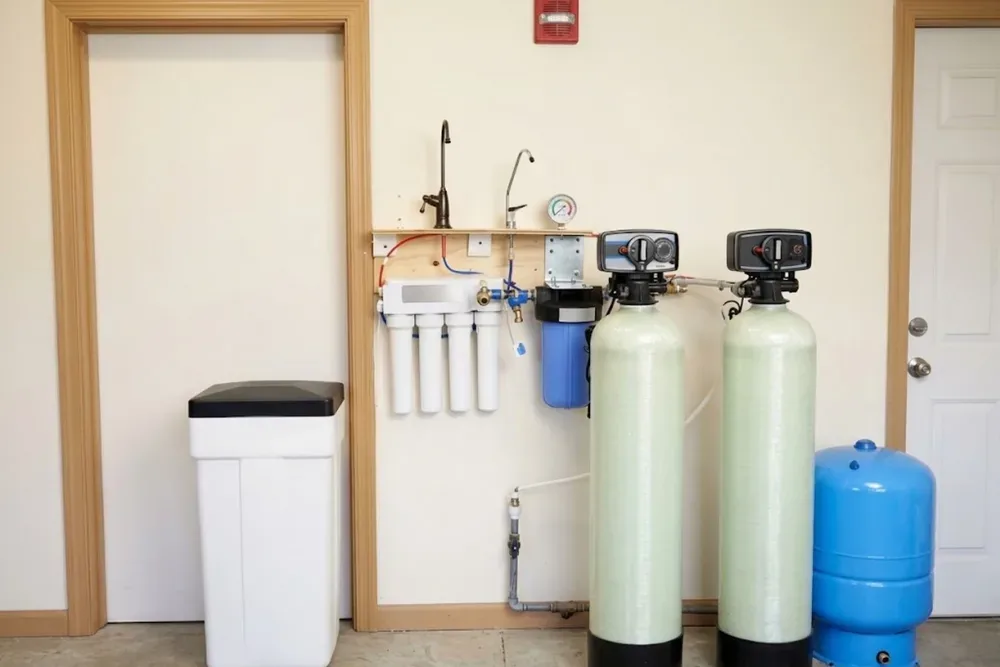
Why hard water scale matters to a water heater.
Hard water carries dissolved calcium and magnesium. When water is heated, those minerals come out of solution and form scale, a chalky crust that coats heating elements, burner surfaces, heat exchangers and the bottom of the tank. Scale acts like insulation, so the heater works harder, wastes energy and wears out sooner.
In Claremont, this is a real factor, not a theory. The local supply is moderately hard to very hard depending on the source, and a heater that has never been flushed is a prime candidate for buildup.
Local note
Claremont water hardness from the utility's own report.
Golden State Water Company serves the Claremont Water System and reports in its 2026 Annual Water Quality Report, covering 2025 data, that hardness as calcium carbonate ranges from 97 to 330 milligrams per liter, with an average of 190. The same report gives 5.7 to 19 grains per gallon, averaging 11.
The company says the supply blends treated groundwater from the Chino, Pomona and Upper Claremont Heights basins with imported State Water Project water. The blend can change, which is why the numbers swing so widely.
For an exact figure at your tap, ask Golden State Water Company at its 24-hour line, 1-800-999-4033.
What those numbers mean in plain terms.
Grains per gallon is the unit most water treatment dealers use. A reading near 11 sits at the very hard end of most dealer charts, and the top of Claremont's reported span, 19, is harder still. Even the low end, 5.7, leaves a faint film on fixtures over time.
For a homeowner, the practical reading is that your heater is working in mineral-rich water at least part of the year. Plan on routine maintenance rather than assuming you will skip it.
What scale does inside a tank heater.
In a gas tank unit, minerals settle on the bottom of the tank, where the burner heats the steel from below. The sediment forms an insulating layer, so the burner runs longer to heat the water, and the tank floor can overheat. That is the source of the rumbling or popping sound when water trapped under the crust boils and bursts through.
In an electric tank, scale coats the lower element and can bury it, causing it to burn out or trip the breaker. Both types lose usable hot water as sediment takes up space in the tank. Over years, the build-up can contribute to leaks and early tank failure.
Signs scale is building up in your water heater.
- Rumbling, popping or crackling from the tank during heating.
- Hot water that runs out sooner than it used to.
- Gritty or cloudy water from the hot taps.
- Lower element burns out more than once.
- Longer recovery time after a shower.
- Visible flakes or chalk in the water when you drain a bucket.
- A higher gas or electric bill with no change in habits.
Tankless heaters and scale.
A tankless unit heats water as it passes through a narrow heat exchanger, and scale narrows those passages. Flow drops, temperatures swing, and the unit may throw an error code. Tankless heaters are more sensitive to hardness than tanks, since the clearances are tiny.
Maintenance is a descaling flush, where a pump circulates a mild acid solution through the heat exchanger and flushes it out. Skipping it in hard water is the number one way to shorten a tankless heater's life.
| Heater type. | What scale does. | Maintenance that helps. |
|---|---|---|
| Gas tank. | Insulating crust on tank floor, noise, wasted fuel. | Periodic flush, anode check. |
| Electric tank. | Coated or burned-out lower element. | Flush, element check. |
| Tankless. | Restricted heat exchanger, error codes. | Descaling flush, softener. |
| Any heater. | Clogged inlet screens and valves. | Clean screens, treat the water. |
Flushing a tank: what it does and its limits.
Flushing a tank means shutting off power or gas, closing the cold water inlet, hooking a hose to the drain valve, and draining water until it runs clear. A plumber may open the cold supply while draining to stir the sediment. Flushing removes loose sediment, not baked-on scale.
Heaters that go years without a flush often have a hard layer that will not drain out. The drain valve may even clog, which is why some people avoid flushing an old tank. A plumber can tell you whether a flush is safe or whether it is time to replace the unit. When something has already failed, water heater repair covers the elements, thermostats and valves that scale tends to damage first.
Anode rods work harder in hard water.
The anode rod is a sacrificial metal bar inside the tank that corrodes so the steel does not. Mineral-rich water speeds up that consumption. When the rod is used up, the tank begins to rust. Checking the rod every few years, and replacing it when it is mostly gone, is cheap insurance for an otherwise good heater.
Softener or filtration: which treats scale?.
A water softener swaps calcium and magnesium for sodium or potassium in an ion exchange resin. That is the equipment that actually prevents scale. A filter, such as a sediment or carbon filter, improves taste and catches particles, but it does not remove the minerals that make scale.
Heater struggling with scale?.
Call dispatch and a licensed plumber can check the tank, flush it and talk through treatment options.
A water softener and filtration setup is often sized to the hardness at your house, the number of people in the home and the flow rate. Some homes pair a softener with a whole house filter. Others try a scale inhibitor, which changes how minerals stick but does not remove them, so results vary.
Softener trade-offs worth knowing.
A softener adds salt or potassium refills, a drain line for regeneration, and a bit of floor space. Softened water can feel slippery, and some people prefer hard water for drinking, which a plumber can handle by leaving a kitchen cold tap on the untreated line.
Local rules about brine discharge can apply to softeners, so ask your water utility or city before choosing a regenerating model. A plumber can also point you toward models that regenerate by demand rather than a fixed timer, which uses less salt and water.
What affects the price of treating hard water.
The cost of treatment depends on hardness, household size, the choice of softener, filter or both, and how hard the install is. A softener needs a drain, an outlet and a spot with a bypass valve. Tight utility closets and long pipe runs add time.
For maintenance, the price is mostly labor and a few parts. Plan on a flush each year as a rule of thumb, and more often if sediment is heavy. If a heater is already failing, repair or replacement costs depend on the model and what is wrong.
Checking nearby towns.
Water changes at the city line. Neighbors in La Verne and Montclair draw from different water systems, so Claremont's numbers do not carry over. In Montclair, ask Monte Vista Water District, at (909) 624-0035, for hardness at your address.
Sources for the hardness figures.
The hardness range on this page comes from Golden State Water Company's 2026 water quality report. Equipment that connects to your supply line follows the California Plumbing Code, built on the Uniform Plumbing Code (UPC).
Questions about hard water and water heaters in Claremont.
.
Golden State Water Company's 2026 Annual Water Quality Report, based on 2025 data, lists hardness from 97 to 330 milligrams per liter, an average of 190, or 5.7 to 19 grains per gallon with an average of 11. The number varies with the source blend, so ask the utility about your address.
.
Many plumbers suggest once a year in hard water, and more often if you hear rumbling. A heater that has never been flushed may have crusted sediment that will not drain, so have a plumber check it first. Tankless units need a descaling flush on a similar schedule.
.
Yes. By removing calcium and magnesium before the water is heated, a softener cuts down on scale in tanks, elements and heat exchangers. It does not replace maintenance, since the anode rod and sediment still need attention, but it slows the main cause of buildup.
.
Sediment on the bottom of a gas tank traps water that boils and bursts upward, causing popping or rumbling. It is a sign of scale and a hint that the tank floor is running hot. A flush may help, and a plumber can judge whether the tank is still sound.
.
Not usually. Sediment and carbon filters trap particles and improve taste, but calcium and magnesium dissolve in the water and pass through. Only a softener or similar treatment addresses hardness. Ask a plumber which fits your needs.