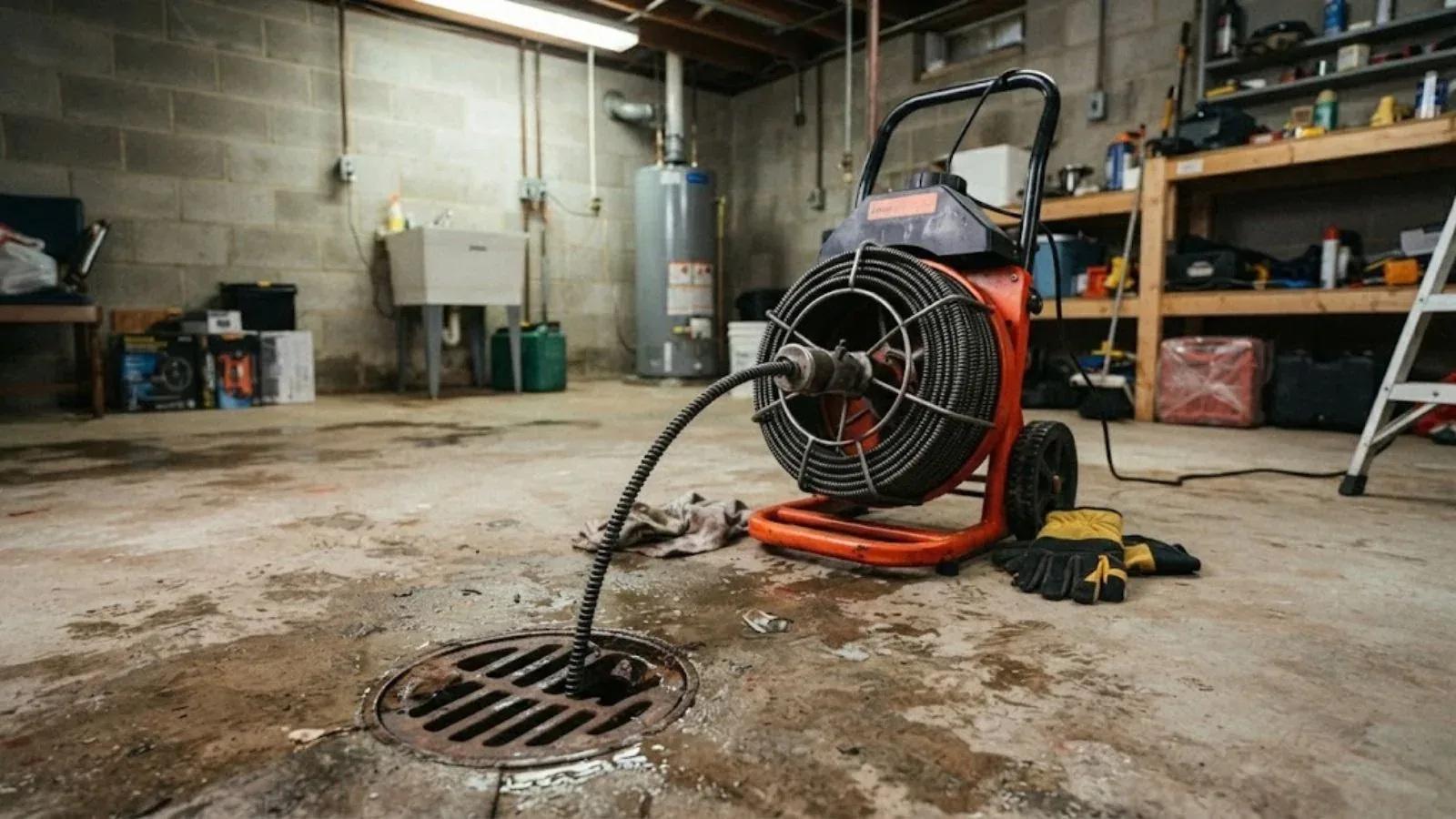
The main signs of a clogged plumbing vent.
The clearest clogged plumbing vent symptoms are gurgling from drains, slow draining at several fixtures at once, a toilet that bubbles or flushes weakly, and a sewer smell that comes and goes. They show up because drain pipes need air behind the water. When the vent that supplies the air is blocked, water struggles to move and traps can lose their seal.
None of these signs proves a vent clog on its own. A blocked drain line can cause nearly the same list. The pattern across the house is what tells you which one you probably have.
Reading the pattern in your house.
A single slow sink is usually a local clog in that sink's trap or branch. Trouble in more than one place changes the picture. Where the symptoms show up, and when they happen, narrows the cause better than the symptom itself.
Symptoms to watch for.
- Gurgling or glugging noises from a sink, tub or shower drain.
- Toilet bowl water that bubbles or drops when another fixture drains.
- Several drains slow at the same time, upstairs and downstairs.
- Sewer smell near a drain that otherwise looks clear.
- Water that drains in surges or hiccups instead of smoothly.
- A toilet that flushes weakly or seems to hesitate.
- Dry, shallow P-trap water in a fixture you rarely use.
Why a blocked vent makes noise.
Gurgling is air being pulled through standing water. When a drain empties, it needs to bring in air from the vent. If that path is blocked, the pipe pulls air back through the nearest P-trap instead, bubbling through the water seal. That is the glug you hear from a sink after the washer drains.
This is also why smell can show up. A trap pulled partly dry no longer blocks sewer gas, so odors drift into the room. Pouring a cup of water into a dry floor drain or guest tub drain refills the trap for a while. If the smell returns, something is wrong above or below.
Vent clog or drain clog: the simple tests.
You can sort out the likely cause with a few minutes of watching and listening. These tests are not exact, but they give a plumber a head start and keep you from guessing.
| What you notice. | More likely a vent clog. | More likely a drain clog. |
|---|---|---|
| One fixture slow, others fine. | Rare. | Common. |
| Gurgling at several fixtures. | Common. | Possible. |
| Toilet bubbles when the washer drains. | Possible. | Common in main line. |
| Water backs up in a tub or floor drain. | Rare. | Common. |
| Symptoms start after a storm or windy day. | Possible. | Unlikely. |
| Problem gets worse as more water runs. | Possible. | Common. |
The key difference is backup. A vent clog slows and gurgles, but sewage rising out of a floor drain or tub means the line is blocked, and that is more urgent.
A five-minute fixture walk.
Run each test and write down what you notice before calling anyone. Keep towels nearby in case a fixture overflows.
Testing around the house.
- 1.
Check the lowest drain.
Run water in the lowest fixture in the house for a minute. If water rises in a tub or floor drain, the main line is likely blocked.
- 2.
Flush and listen.
Flush the toilet farthest from the main line and listen at nearby drains for gurgling.
- 3.
Run two fixtures together.
Drain a sink and a tub at once. New noises or slowing point to a venting or main line issue.
- 4.
Pour water in unused traps.
Add water to guest bath and basement drains, then see whether the smell goes away.
- 5.
Note the timing.
Does it happen only when the washer drains, in the morning or after rain? Patterns help the plumber.
If the lowest fixture backs up, stop using water and call. Never open a clean-out cap yourself if wastewater is rising, since it can spill out fast.
Not sure what is blocked?.
Dispatch can send a licensed plumber to test the vent and scope the line.
What else can look like a vent problem.
Many things imitate a vent clog. Hair and soap build in a P-trap. A partial blockage in the branch line gurgles when a second fixture drains. Tree roots in an older sewer line, grease in a kitchen drain, or a belly in the pipe that holds water all create similar sounds.
A plumber separates these with a camera. It goes down the drain or the vent and shows what is there. For the main line, sewer line cleaning covers cameras and clearing equipment. For one stubborn fixture, drain cleaning usually does it.
What a plumber checks first.
A professional starts with the same pattern you did, then verifies it. Expect these checks in roughly this order.
- Running water at each fixture while listening and watching traps.
- Looking at the vent terminations on the roof and in the attic.
- Running a camera into the drain, and sometimes the vent.
- Testing airflow in the vent pipe.
- Looking for sagging pipe or a cracked connection.
- Snaking or jetting once the blockage is located.
Claremont-specific: private lateral or City main?.
If the clog turns out to be the line and not the vent, the next question is whose pipe it is. That changes who you call.
Local note
Who handles sewer problems in Claremont.
The City of Claremont's sewer page says the City owns and operates the sanitary sewer and that property owners are responsible for the private lateral running from the house to the City main. The City does not respond to problems inside a private lateral, and it asks residents to verify with a plumber before calling.
For a suspected main backup, the page lists Community Services at (909) 399-5431, open 7am to 6pm Monday to Thursday. After hours, it points to the Police Department non-emergency line at (909) 626-1296. The Engineering Division at (909) 399-5465 can help locate the lateral.
When to stop waiting and call.
Occasional faint gurgling is a nuisance. Some signs mean do not wait.
- Wastewater rising in any tub, shower or floor drain.
- Sewer smell that stays strong in a room.
- Every fixture draining slowly, especially after rain or heavy laundry.
- Gurgling that is getting worse over days.
- Toilet that overflows when a nearby fixture drains.
A sewer smell with no obvious source is also worth a call. Homes near Pomona and in La Verne see the same patterns, and the diagnosis is the same everywhere.
Standards behind the diagnosis.
The California Plumbing Code, built on the Uniform Plumbing Code (UPC), requires fixtures to be vented so drains can flow and traps keep their seal. That is why a vent clog shows up as gurgling and slow drains.
Clogged plumbing vent questions.
.
Mostly a gurgling or glugging from drains, like air bubbling up through the water. It often follows a flush or a washing machine cycle. You may also hear the toilet bowl bubble. Noises at more than one fixture suggest a vent or main line problem rather than a local clog.
.
Yes. Without proper venting, the water seal in a P-trap can be pulled out, letting sewer gas into the room. Refilling the trap with water helps for a short while. If the smell returns, a plumber should check the vent and the line together.
.
Usually not. Slow drains and gurgling are warning signs, not floods. It becomes urgent if sewage backs up in a tub or floor drain. In that case stop using water and call, because the problem is in the line, not just the vent.
.
Several slow fixtures with gurgling fit either one. Backup in the lowest drain, especially a floor drain or tub, points to the sewer line. A plumber with a camera can confirm, and our sewer line cleaning service handles blocked mains.
.
Call a plumber first. The City of Claremont says the owner is responsible for the private lateral, and it does not respond to lateral problems. If the plumber finds the main is blocked, call Community Services at (909) 399-5431 or the after-hours line.
.
Sometimes, if wind clears leaves or a nest shifts. Most of the time the blockage stays and the symptoms return. If gurgling keeps happening, have it checked instead of waiting for the next storm.